Returning to Barcelona as a VC - what's changed in three years?

I joined Nauta’s Barcelona team as a temporary Analyst in 2023 and returned in 2026 as a full-time Associate. Same city, same fund, same office. Almost everything else has changed...
Round sizes have shifted
What counted as a Seed round three years ago, €1M-€3M for a founding team with a deck and a handful of early customers, is now labelled as “pre-seed.”
This is more than a naming convention. It has forced investors to rethink how they approach risk, ownership and timing. The window between “too early” and “ready to back” has narrowed considerably, sometimes to a matter of weeks. Getting close to founders before others is now a necessity for all investors.
AI has become the foundation, not a feature
In 2023, when founders pitched an “AI company,” you often had to dig further to understand what that meant. In many cases, AI was somewhere on the roadmap, more aspirational than structural.
That has changed fundamentally. The best companies today are AI-native from day one. They are rethinking unit economics, competitive positioning and how they reach customers, not simply using AI in a product or messaging.
But what stands out most is the speed of execution. Teams are now reaching a first commercial product within months of founding. That shortens not just product cycles, but the timeframes in which investors have to make decisions.
The founder profile has evolved
Three years ago, many Spanish founders were first-time builders, coming from consulting, banking, or large corporates, learning both company-building and product-market fit at the same time.
Today, a larger share are second-time founders or early operators from high-growth scale-ups like Glovo, Factorial or Typeform. That experience is visible: their decks explain the opportunity more clearly, the data rooms are more structured, and they display a sharper view on how to win in the competitive landscape. In 2023, a polished pitch stood out but in 2026, it’s the minimum expectation.
The tricky part for an investor is that as overall quality rises, distinguishing genuinely exceptional companies from very good ones becomes harder.
International capital is no longer the exception
We used to make a point of noting when UK or US investors participated in Spanish rounds. Now it barely registers, and it’s increasingly happening at the earliest stages.
A good example is MITO, an AI-native video platform co-founded by Iñaki Berenguer. Its pre-seed round was led by Lightspeed, with Sequoia and A16Z scouts involved alongside local funds. Three years ago, a top-tier US fund leading a Spanish pre-seed would have made front pages, but now it is just business as usual.
This international interest in Spanish startups increases competition for local funds, since they are no longer the default, and founders have many more options for their initial rounds’ lead investor. Which makes life harder for VCs but unlocks much more potential for founders and the ecosystem as a whole!
Barcelona has become a genuine tech destination
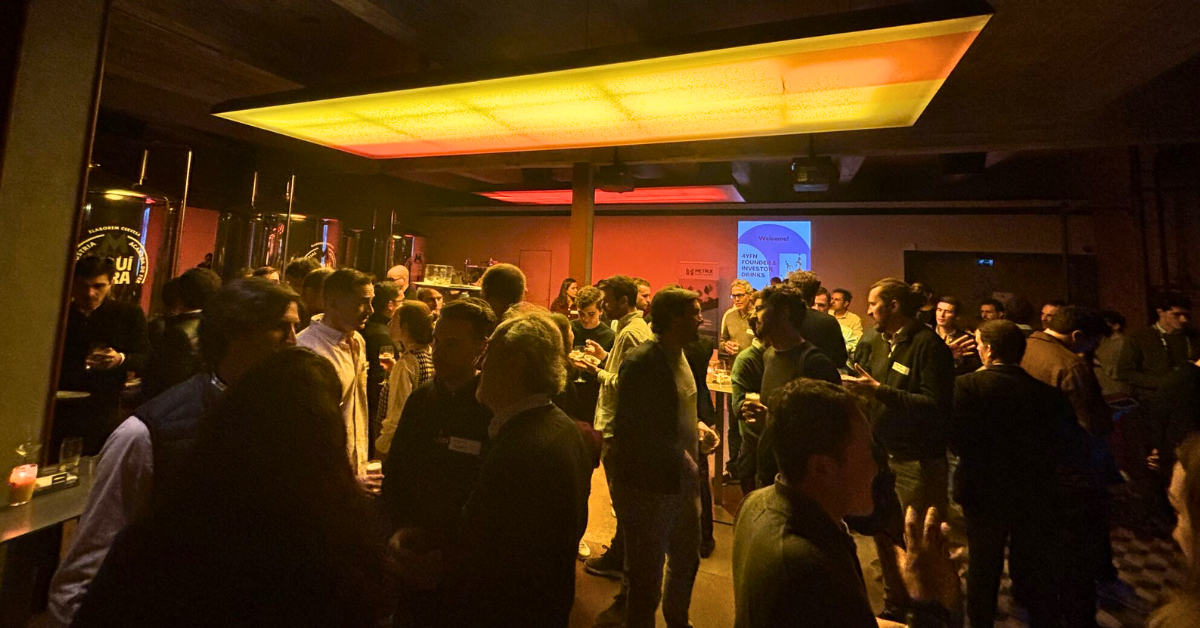
The city already had strong anchor events: MWC, 4YFN, the Barcelona DeepTech Summit. What has changed is the broader ecosystem that has grown around them.
SaaStock’s evolution into Shift AI, scheduled for Barcelona in October 2026, is a telling signal. The AI Summit Barcelona is scaling to over 10,000 attendees as part of a city-wide AI Week. Project Europe has visited the city. Events like Unlock VC have chosen Barcelona as their venue.
Spain is no longer a stop on a European tour. It is increasingly where people come to find founders, talent and opportunities.
A stronger layer of content and community
In 2023, local founders largely consumed US and UK content (podcasts, newsletters, long-form writing etc.) to understand how to build companies. But that is changing.
A more localised knowledge layer is emerging through podcasts like Itnig and The Startup Podcast, and through founders and investors who now share their thinking publicly. Figures like Samuel Gil and Jaime Novoa have built real audiences by communicating on the craft of building and investing.
This localised knowledge will compound over time as founders arrive better prepared. The ecosystem feels much denser and more connected than when I left.
What hasn’t changed yet?
Some structural gaps definitely remain!
For example, exit liquidity is still limited. There have been few landmark IPOs or acquisitions that recycle capital back into the ecosystem and create the kind of wealth that seeds the next generation of founders and angel investors.
More importantly for early-stage founders, the number of local funds able to lead rounds above €5M remains constrained. There are a handful of investors consistently writing institutional cheques at that scale, but not enough relative to the quality of companies now being built. For founders with serious ambitions, the funding options at growth stage are still too narrow.
Closing thoughts
As I returned to Barcelona in 2026, I found the ecosystem to be undeniably stronger, faster and more internationally connected than it was three years ago. The base level quality of founders has improved significantly, the pace of company-building has accelerated, and international capital is no longer a novelty.
But these same shifts have raised the bar for everyone. Competition for the best deals is more intense. Differentiation is harder to identify. Both founders and investors are working on shorter timelines with less room for slow decisions.
The market has never been more interesting, but it has also never been more demanding.
Looking forward to investing and building in this new ecosystem!