Introducing Potential Sciences: the first investment from Nauta Fund VI
We're delighted to announce that Nauta has backed Potential Sciences, a frontier AI lab for chemistry, as our first investment from Fund VI. The company has emerged from stealth with eight figures in capital and compute, to make gold-standard chemistry data 100x cheaper for AI drug discovery.
Potential Sciences' mission is to predict how any molecule will behave before it is ever made, by training AI on data generated from the laws of physics, at the accuracy of a lab measurement. They are starting with small-molecule drug discovery, working with AI-first labs on lead optimisation, reaction prediction and covalent drug design, where existing methods fall short. The longer term goal is a computational oracle for chemistry: a model that tells scientists which molecules are worth making before anyone steps into a lab, across drugs, catalysts, enzymes and materials.
The eight-figure round is led by the UK's Sovereign AI Fund and Twin Path Ventures, alongside Nauta, Blue Wire Capital, Lightfield Equity, Odyssey, Portfolio Ventures and Rule30. Angel investors include Patrick Collison (co-founder of Stripe), Chris Gibson (co-founder and former CEO of Recursion) and Tim Sadler (co-founder of Tessian). The Sovereign AI Fund backs the company as both investor and compute partner, enabling access to national supercomputing including the Isambard-AI supercomputer in Bristol. The funding will be used to grow the research team, scale the dataset and train the company's first atomistic foundation models.
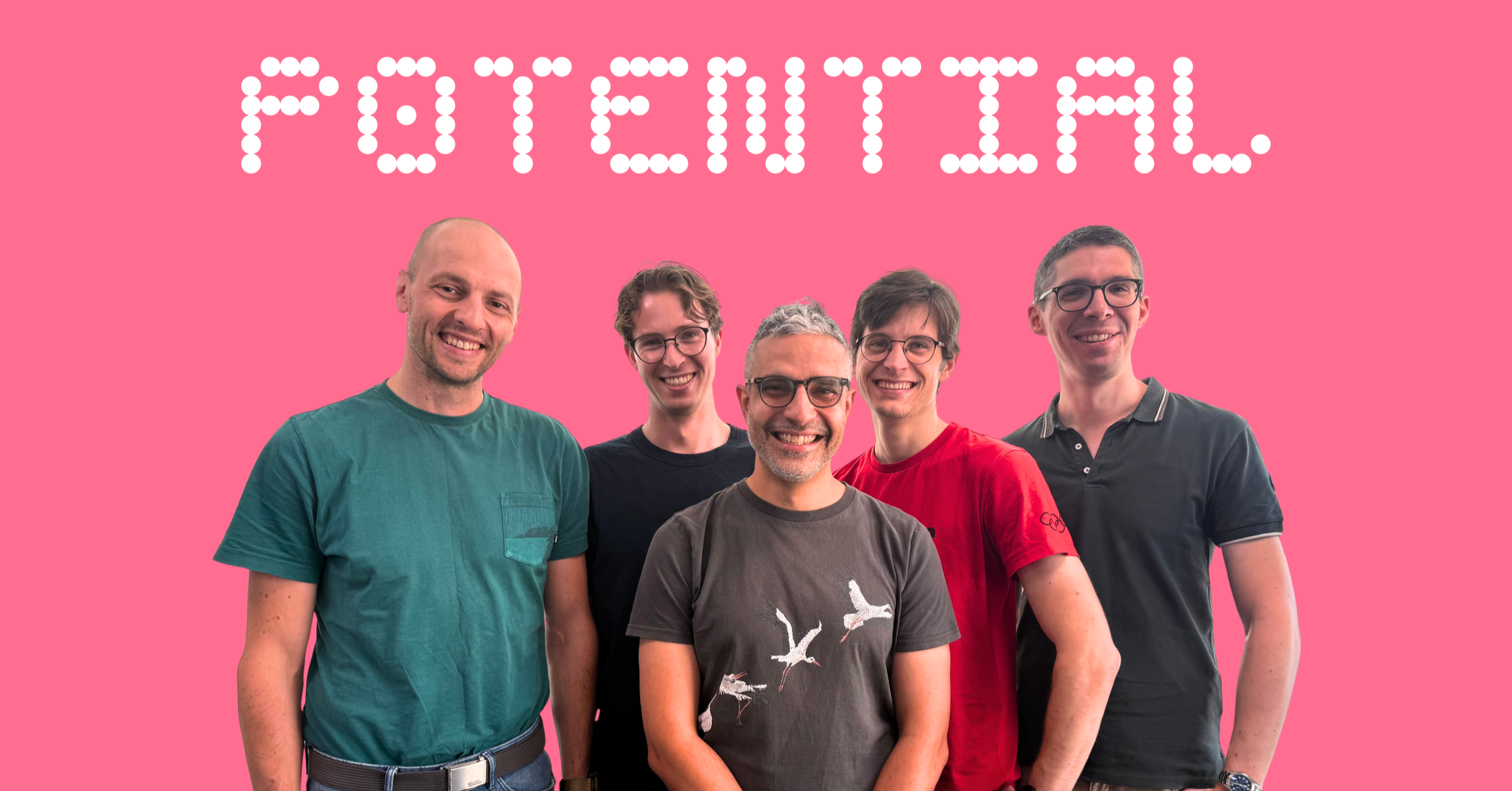
Founded by Hatem Helal, the company brings together physicists, chemists and mathematicians who trained at Caltech, Cambridge and CERN, and built AI for science at Graphcore, Recursion and Dayhoff Labs. Between them they have trained large models on thousands of AI accelerators, created QM1B, a billion-calculation quantum chemistry dataset, and won two tracks of the OGB Large-Scale Challenge at NeurIPS 2022. The company is based in Cambridge, with researchers in Bristol and Tübingen.
Most AI models in chemistry learn from the same limited record of past experiments, or from simulations too crude to trust. In drug discovery, the best models have already learned everything the existing record can teach, and every failed experiment costs years. Simulating chemistry from the laws of physics offers a new source of data, matching real experiments and capturing the failures that published research rarely records.
Until now, generating this data has been prohibitively costly. The bottleneck is software rather than physics: the field's main quantum chemistry codes were written for 1980s supercomputers with a handful of processors, and cannot use the thousands of cores in a modern GPU.
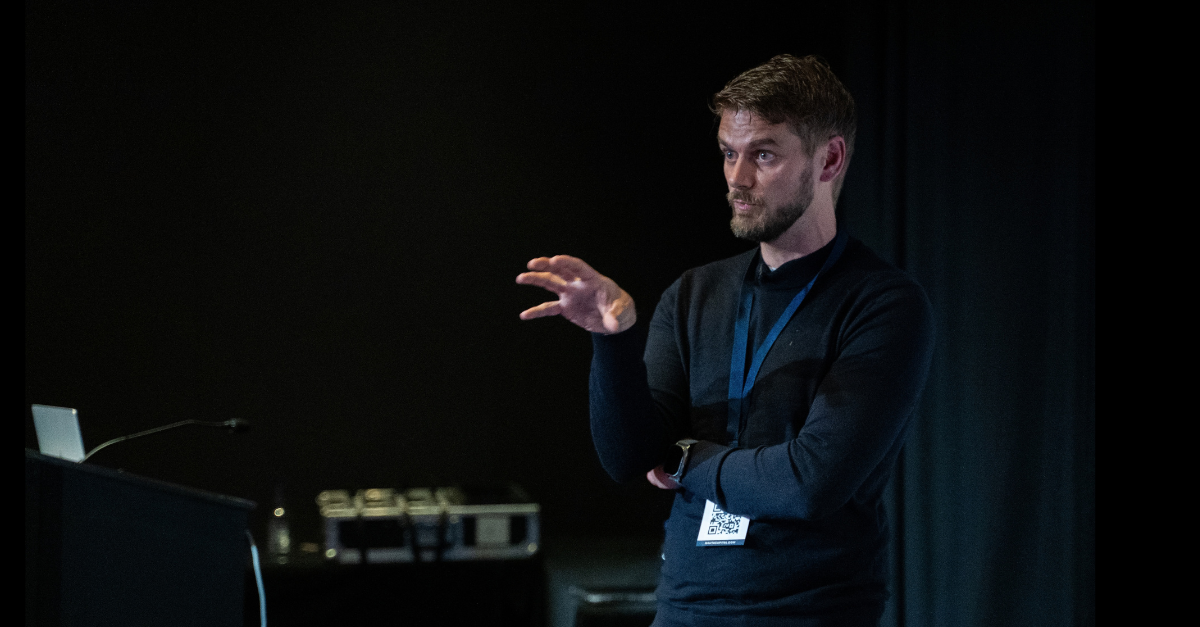
Hatem Helal, founder and CEO of Potential Sciences, said: "AI for drug discovery has learned almost everything the existing experimental record can teach it. The next leap needs new data, and the laws of physics can supply it, as long as your software can use modern hardware. We rebuilt quantum chemistry for GPUs so that gold-standard accuracy is affordable at the scale AI needs. When your code is 100 times more efficient, a seed round buys what used to take a dedicated data centre."
AI Minister Kanishka Narayan said: “Potential Sciences is a startup that’s grasping an opportunity Britain is uniquely well-placed to capitalise on: using our deep expertise in data, fundamental science and computing to potentially unleash the next great wave of medical discovery. Solving chemistry’s ‘data bottleneck’ could allow researchers to explore new treatments for diseases that are currently deemed too rare or expensive to focus on. This is AI at its best – pushing the boundaries of innovation, ultimately to improve people’s lives."
Potential Sciences has rebuilt quantum chemistry for GPUs from the equations up. Its engine runs gold-standard CCSD(T) calculations at 100 times lower cost than traditional implementations, so it can generate accurate data for millions of molecules where the field could previously afford thousands. That data trains atomistic foundation models that learn how atoms interact and improve with compute rather than lab time. For a drug discovery team, that means knowing which molecules are worth making, how strongly they will bind and whether they will hit proteins they shouldn’t, before ordering a single assay. Earlier, cheaper answers change the economics of drug discovery, and with it, which problems are worth pursuing.
When we launched Nauta VI, we set out to back exceptional technical founders early, including through Nauta Labs' focus on deep tech. Potential Sciences is an excellent example of the kind of company we built the fund for, and we're incredibly excited to see where they go next.